Cleaner data, ready to use
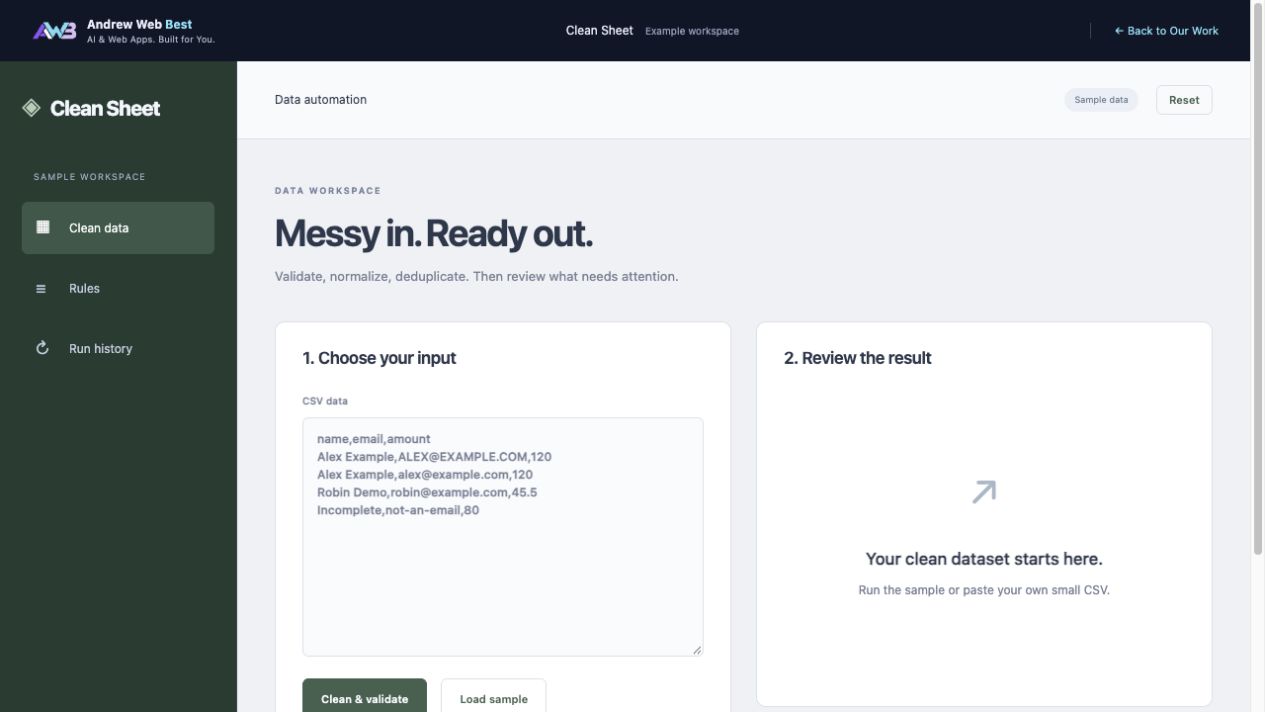
Validate CSV files, normalize names and formats, detect duplicates, and produce both clean records and an understandable exceptions report.
Simplify repetitive tasks, data processing, reporting, and connections between systems.
Discuss this project ↗Turn a repeatable manual sequence into a clear workflow. Inputs are validated, exceptions stay visible, and outputs are ready for the next step.
Python, JavaScript, APIs, scheduled jobs, and workflow platforms as the task requires.
Define triggers, decisions, outputs, and exceptions that need attention.
Clean, validate, transform, and organize information before it moves on.
Connect the relevant tools through their supported APIs.
Add useful logs, review points, and a way to understand failures.
The best automation starts with a process people already understand. We look for the repeated handoffs: copying a spreadsheet into another system, checking the same fields, preparing a weekly report, or routing requests to the right team. Then we make those steps consistent, while keeping unusual cases visible and easy to resolve.
Validate CSV files, normalize names and formats, detect duplicates, and produce both clean records and an understandable exceptions report.
Collect agreed information from your tools, calculate the relevant figures, and prepare a report on a schedule or when new data arrives.
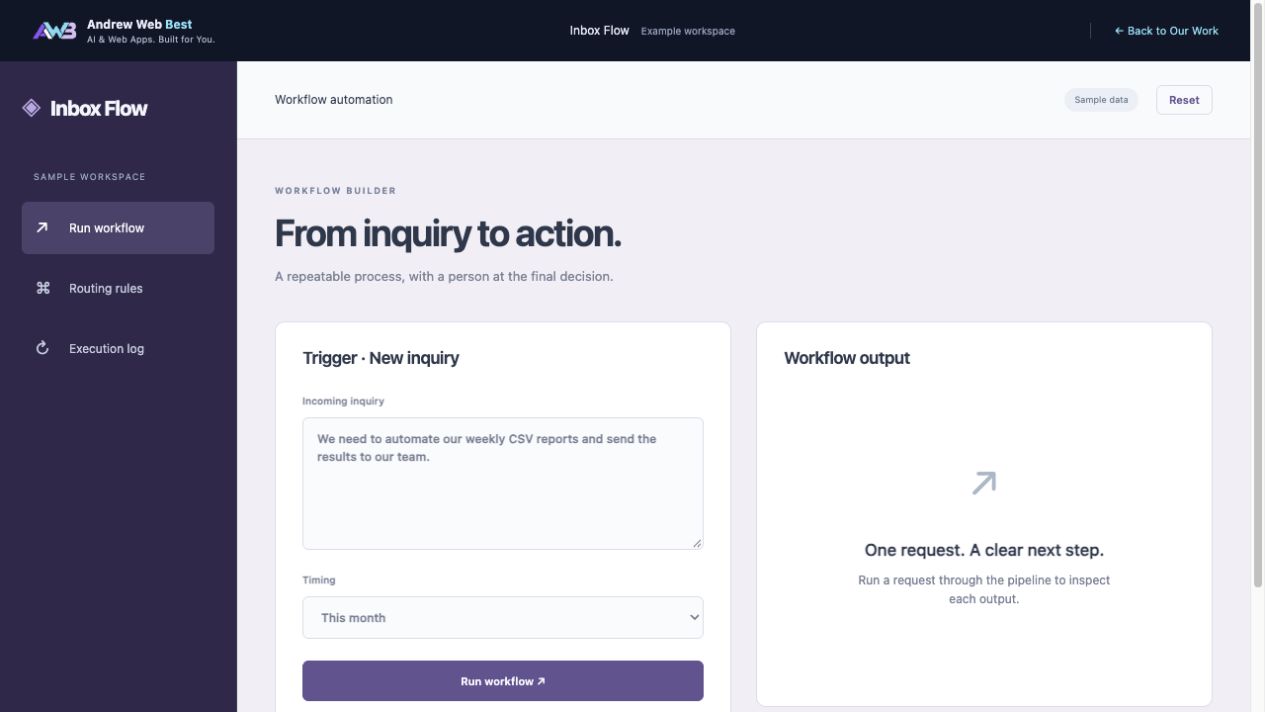
Classify incoming enquiries, create a task with the right context, and prepare a response for review instead of leaving everything in an inbox.
We agree a focused scope, make the work visible, and test the important scenarios together.
Follow an example from input to output and document the decisions, edge cases, and people involved.
Agree validation, ownership, schedules, retries, and how duplicate events or incomplete data should be handled.
Connect the necessary systems and give people clear status, logs, and a queue for exceptions.
Run representative cases, check recovery after failure, and document how to pause, rerun, and maintain the process.
Usually. We check the available APIs, exports, permissions, and limits before choosing the connection. Sometimes a small script is sufficient; sometimes a workflow platform is a better fit.
We design for that situation: useful error messages, retry rules, duplicate protection, and a clear place for manual review. The recovery behavior is agreed before the workflow goes live.
It can run in your existing infrastructure, a scheduled hosted job, or a workflow platform. We select the setup around reliability, access, cost, and who will maintain it.
A new product, a better workflow, or an idea worth testing.